

Fixed Lump Sum vs. Cost-Plus Contracts: Melbourne Custom Build Guide
When you are building a custom home in Victoria, you are likely to choose between two types of contracts – one a fixed lump sum contract and another a cost-plus contract. Here, we will attempt to unravel the essential characteristics of these two contract types and also examine how lump-sum contracts provide greater cost security and a better sense of cost transparency for clients.
Fixed Lump Sum vs. Cost-Plus Contracts: Which is Safer for Your Melbourne Custom Build?
Building a custom home is perhaps one of the biggest financial decisions you will ever make. So when a custom home builder talks about contracts with you, you should actually understand what you are signing – not just nod along and hope for the best.
The two contract types you are expected to be offered are a fixed lump sum contract and a cost-plus contract. The way each of these contracts handles your money is different.
One tells you the price before the first brick is laid, while in the other, you will find out the price of your custom home when it is done. Let’s walk through what each one actually means for you, your budget, and your peace of mind.
Which Contract Type Provides Greater Cost Certainty?
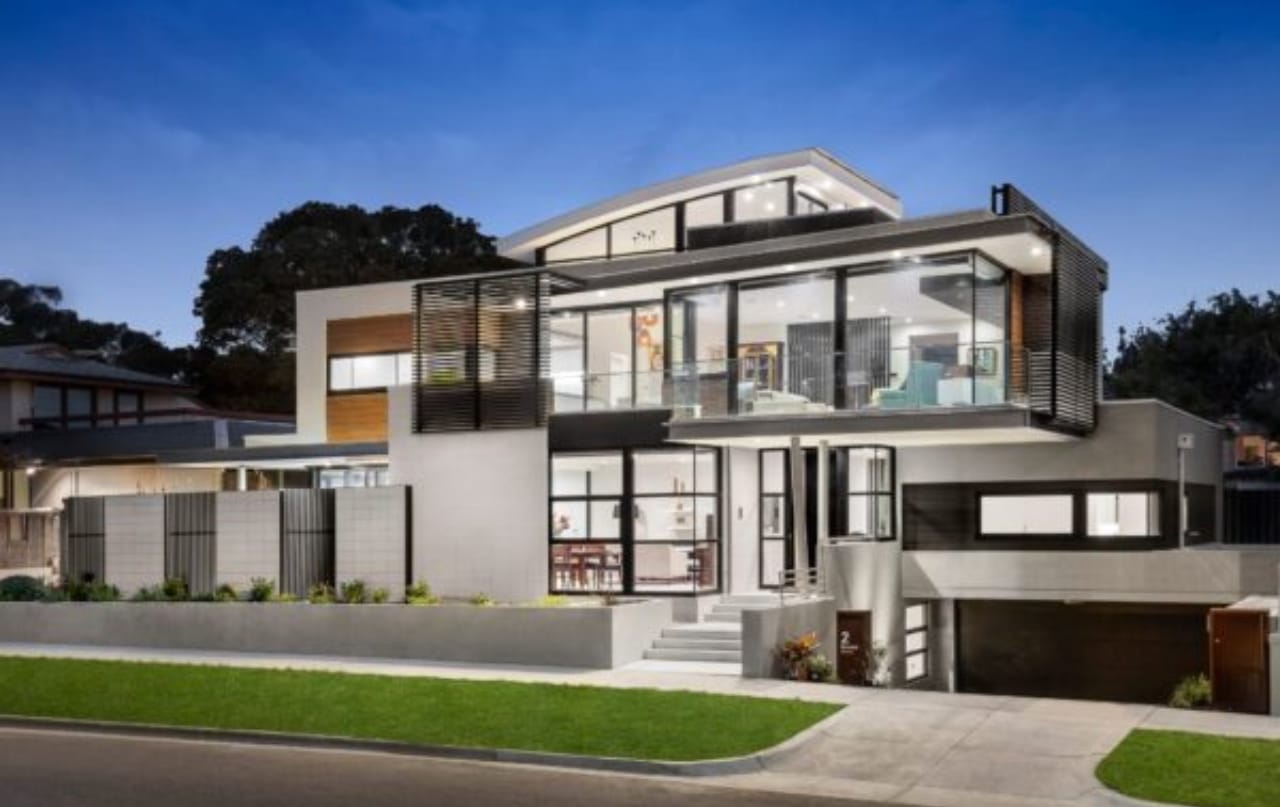
A fixed lump-sum contract gives more cost certainty for your custom build. Here, before a single tradesperson sets foot on your property, you and your builder agree on the total price of the build. That covers labour, materials, design and the builder’s margin, among other things. Once it’s locked in, that’s your number. No nasty surprises at the end of each month, no wondering if a wet week in winter is going to escalate your budget.
A cost-plus contract is a different story. Here, your builder covers all the actual costs as the construction proceeds – subcontractors, materials, labour – and then adds its margin on top. That margin might be a flat fee or a percentage of total costs. Either way, there is no agreed cost ceiling beforehand in a cost-plus contract. If prices move or the job takes longer than expected, those extra costs come straight to you.
Is a Fixed Lump Sum Contract Safer for Homeowners?
In most cases, it is, and by a fair margin. Here, you know your home building cost from day one of the commencement of the project. You can go to your bank with a clear number, set up your finances properly, and actually sleep at night without running worst-case scenarios in your head.
Here in Victoria, fixed-price residential contracts are also covered by the Domestic Building Contracts Act 1995, which puts real guardrails around how much a builder can increase the price, how progress payments work, and what limits apply to deposits. That legislation exists for good reason – because open-ended arrangements can really sting homeowners who don’t know what to watch out for.
There is another practical reason to favour fixed lump sum contracts: your builder has skin in the game. If their costs come in higher than they quoted, that’s on them. So a builder working under this model tends to plan carefully, price thoroughly, and manage their tradies tightly – because their profit depends on running an efficient build. That discipline flows through to a better experience for you.
At Arch10, a fixed lump sum is the only way we work. As a custom home builder Melbourne locals can count on for straight answers, we think it is only fair that you know the cost of your dream home before the ground breaks – not after.
What are the Risks of a Cost Plus Contract?
However, a cost-plus contract isn’t necessarily a sign of a dodgy builder – some use it for genuinely complex projects where pricing upfront is tricky. But as a homeowner, you carry almost all the risk in this type of financial arrangement.
The main distinguishing factor of a cost-plus contract from a fixed lump-sum contract is that the former has no fixed upper limit. If a builder gives you an estimate of $900,000 and the build runs over time or materials get more expensive mid-way through, that final bill could land well over $1.1 million. An estimate under a cost-plus contract is not a promise – it’s at best a guess.
There is also a structural tension worth thinking about. If your builder earns a percentage of total costs, a more expensive build actually makes them more money. That is not a great incentive for keeping your budget under control.
And then there is the paperwork. Under a cost-plus arrangement, you will need to go through invoices and receipts regularly to make sure everything is in order. Essentially, in a cost-plus contract, you need to become the financial auditor of your own build – on top of every other hassle that comes with a major construction project. Most people find that exhausting, and understandably so.
If you do find yourself looking at a cost-plus contract, push hard for a maximum price clause and a clear schedule of rates from the outset. Don’t just take an estimate on faith.
Can the Price Change Under a Fixed Lump Sum Contract?
This is probably the question custom home builders get asked more than any other – and justifiably so. The honest answer is: not usually, but there are some legitimate exceptions you should know about.
Under Victorian law, your builder generally can’t just increase the price in a fixed lump sum contract because their costs have gone up as compared to what they quoted. The fixed price is usually protected.
The exceptions that can move the needle are provisional sum items (where exact costs genuinely can’t be pinned down at signing), prime cost items like specific fittings priced at a nominated rate, and changes to statutory requirements that come in after the contract is executed.
Where the price most commonly shifts is in variations – and those come from you, not your builder. If you decide you want to upgrade your stone benchtops, move a bedroom wall, or add an alfresco that wasn’t in the original plans, they would naturally come with extra cost. The good news is it is your call. No one’s adding surprise costs to your contract without your consent.
This is exactly why a home building cost calculator is such a useful starting point. Running your wish list through one before you finalise your design means fewer mid-build changes and a lower risk of cost increases during the construction process.
How are Variations Handled in a Fixed Price Contract?

A variation in the construction business is any change to the agreed scope of work after your contract is signed.
Under a solid fixed lump sum contract, every variation has to go through a proper process: written notice, agreed cost, agreed timeline impact, and your sign-off before the work happens. No builder should be doing extra work on the assumption that their clients would pay for it later.
Variations aren’t necessarily a problem – they are a normal part of building a home that needs to be truly tailored to how one lives. Tastes change a little, site conditions occasionally throw up surprises, and sometimes a better idea comes along mid-build. The key is that every change needs to be documented clearly, and you should never be caught off guard by the cost.
At Arch10, we handle variations the way every builder should: in writing, with clear numbers, before anything changes on site. As experienced custom home builders, we have seen what poorly managed variations do to a client relationship – and it’s not pretty. We keep the process tight so that our clients stay in control of the project.
The best way to minimise variations is to nail your selections and finalise your design before construction kicks off. Work through your layout, finishes, and fixtures in detail with your custom home builder upfront, and you will have far fewer decisions to make under pressure once the build is in full swing.
How Does a Builder Make Money Under a Cost-Plus Contract?
Under a cost-plus arrangement, a builder typically makes money in one of two ways: through a fixed management fee that stays the same regardless of what the build costs are, or a percentage margin applied to every dollar spent on the project.
The percentage model is where it gets interesting. Say your builder is on a 20 per cent margin. If the build costs $1 million, they make $200,000. If it blows out to $1.2 million – due to delays, cost increases or any other reason/s, they make $240,000. The more you build costs, the more they earn, and it is something you should factor into your home-building decision.
A fixed management fee is a bit more aligned with your interests because here the builder’s income doesn’t grow when building costs grow. But you are still carrying all the risk of overruns, and there is less financial pressure on the builder to keep things tight.
Under a fixed lump sum contract, the dynamic flips. The builder locks in a margin upfront and absorbs any cost overruns on their side. A good custom home builder prices the project carefully and runs a disciplined build because its own profit margin depends on it. That’s the kind of incentive alignment that tends to produce better outcomes for everyone.
Your Custom Builder in Melbourne
If you are looking for a custom home builder, Melbourne has several options to explore. However, to have a custom home within your budget, going for a custom home builder who adheres to or prefers a lump sum contract is a better option.
If you are thinking about building in Melbourne and want to understand what is possible within your budget, start with our home building cost calculator – it will give you a solid estimate to work from. Then have a chat with the Arch10 team.
We are custom home builders who believe in and adhere to fixed prices, complete transparency, and no nasty surprises. We are a custom home builder Melbourne residents have relied on for years. Over the years, we have built our reputation across Melbourne, one home at a time.
FAQs
What is a fixed lump sum building contract?
In a fixed lump sum building contract, a mutually agreed price for your future home/building is settled before the commencement of construction.
Labour, materials, design, the builder’s margin, and all the items/factors that comprise the cost of the building are locked in upfront. Barring some exceptions, here generally what you sign is what you pay, with less scope for moving goal posts.
What is a cost-plus contract in residential construction?
In a cost plus contract, the builder charges for actual project costs as they arise, which include the cost of materials, labour costs, cost of subcontractors, etc. and then adds its margin on top. In cost-plus contracts, there is no fixed end price for the construction of a building. In cost-plus contracts, the final cost of the building is expected to vary with the cost and nature of the construction process. This makes making budget in cost-plus contracts a challenging proposition for clients.
What is the difference between a fixed lump sum contract and a cost-plus contract?
In a fixed lump sum contract, before the commencement of the construction process, the cost of the future building is mutually agreed upon. With a cost-plus contract, you incur actual costs as construction work progresses plus pay a margin for the builder.
What are the advantages of fixed price contracts for homeowners?
Here you know the total cost of the future building before a shovel has moved in the project. That means no price shock during mid-build, and an incentive to the builder to do an efficient job. Victorian law protects fixed price contracts, restricting when and how a builder can increase the price.
What are the benefits of cost-plus contracts for custom home builds?
Cost-plus contracts can be appropriate for complex or unusual builds where the costing of every detail is extremely difficult. With the right builder, a cost-plus contract could offer flexibility in costs.
Which contract type offers more budget certainty?
Fixed lump sum contracts provide much better budget certainty as far as building costs go. As your price of the build is locked in before construction commences, you can plan or arrange your finances with confidence.
How do variations affect fixed lump sum contracts?
Variations are described as modifications, which you request after signing. It may involve upgrading finishes, adjusting a layout, or adding some innovative feature to the building. Each one must be documented in writing with a clear cost and timeline impact before work proceeds.
How are builder fees calculated in cost-plus contracts?
Generally, builders charge either a fixed management fee or a percentage margin on all project costs. The percentage margin commonly varies between 15 and 20 per cent. The percentage model means the more you increase costs, the more your builder earns, which is worth keeping in mind when reviewing any cost-plus proposal.
What risks should homeowners consider with cost-plus agreements?
There is no price ceiling; the builder’s incentive to control costs is also less, and on top of that, the clients have to bear the burden of reviewing invoices throughout the build in cost-plus contracts.
When is a fixed lump sum contract the better option?
Mostly, it is a better bargain, and especially if you have a set budget, a mortgage to manage, or simply want cost certainty regarding your future build. If your design is agreed upon before construction begins and your selections are finalised, a fixed lump sum protects you financially and keeps every stakeholder accountable throughout the build.