
How to Choose a Home Builder: 10 Critical Questions to Ask Melbourne Contractors
Not sure how to choose a home builder in Melbourne? These ten questions cover approval timelines, payment schedules, contracts, finance, customisation, warranty, past projects, rental appeal, and council costs, with Arch10’s answer to each, so you can compare builders fairly, protect your budget, and sign your contract with confidence.
Key points
- Safeguard your money: Insurance first, deposit second and pay at the finished stages.
- Fixed Price: A fixed-price contract with a clear list of allowances.
- Check the proof: Ask for a warranty certificate, an energy rating and a visit to a finished project.
- Plan Approval: Budget for permit timing and council costs from day one.
To choose a home builder in Melbourne, check their registration and insurance, compare fixed-price contracts, and ask for written answers on timelines, payments, warranty and council approvals before you sign.
The builder you pick shapes your cost, timeline, and resale value, so the right questions are worth more than any brochure.
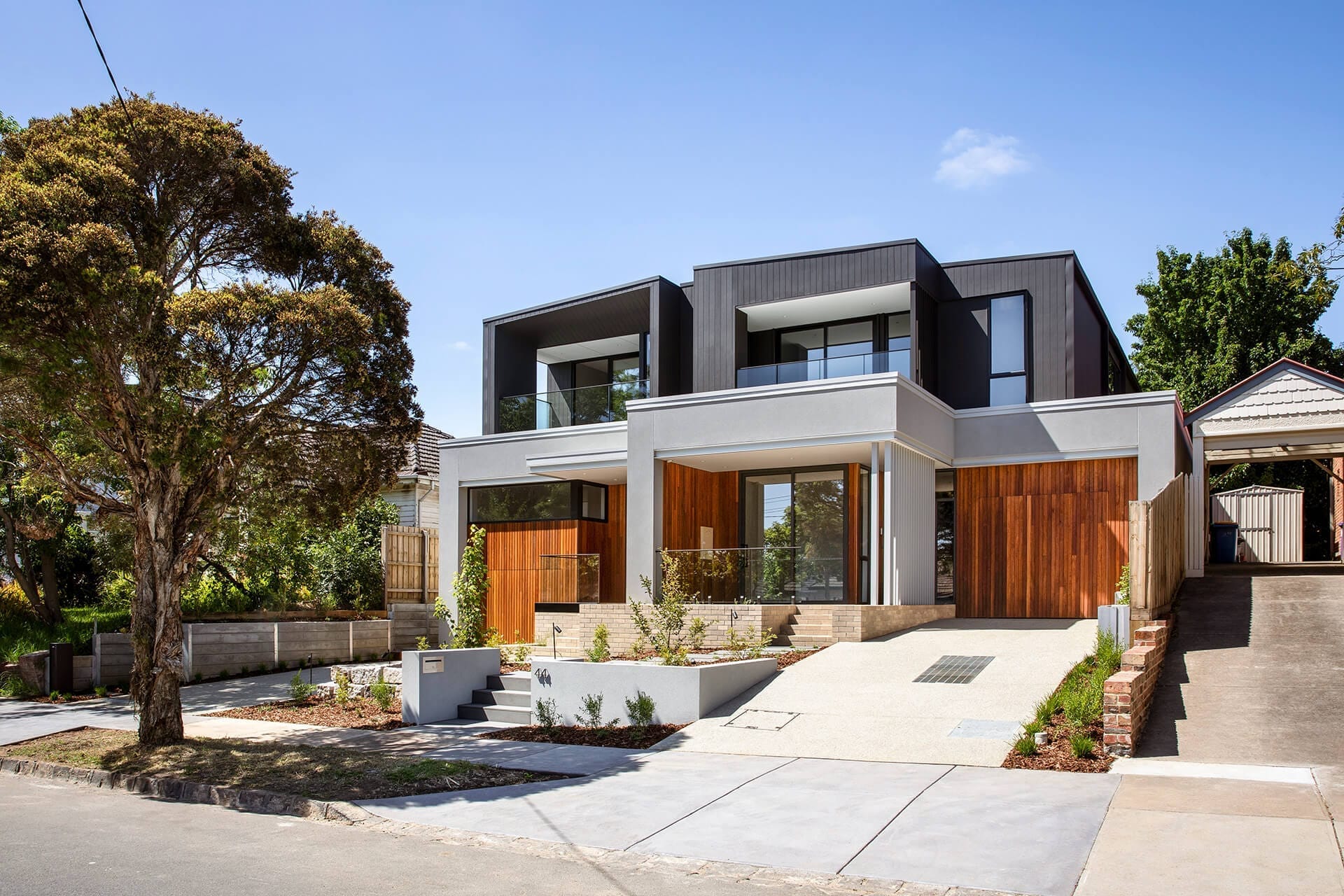
At Arch10, we’ve spent 15+ years as trusted home builders Melbourne homeowners choose for custom homes, townhouses and dual occupancies. The ten questions below follow the order a project unfolds, from approvals through to council costs.
Each starts with our answer, then explains the Victorian rules behind it, so you can hold every builder you shortlist to the same standard.
1. What’s your typical timeline from planning submission to construction commencement and handover?
At Arch10, building usually starts six to eight weeks after contract signing, once the building permit and authority approvals are in place. Most projects reach handover in about 12 months, and more complex builds take longer. Start with:
- Planning: Two or more dwellings on a lot always need a planning permit, and designs must meet every standard in Victoria’s Townhouse and Low-Rise Code.
- Ask any builder: What does the contract say about weather, supply problems and approval hold-ups, and who pays?
2. How do you structure payment schedules, and what are your deposit and progress payment terms?
Arch10’s contracts set out the payment program in writing. Under Victorian law, your deposit can’t exceed 5% on contracts of $20,000 or more, and the balance is paid as the base, frame, lock-up and fixing stages are completed.
- Paperwork before money: Don’t pay a deposit until you hold the insurance certificate.
- Never pay ahead: Insurers may refuse claims for work paid for before it was done.
- Check each stage: Have an independent building inspector verify before you pay.
3. Do you have a fixed-price contract or cost-plus model? What items are covered, and what could trigger variations?
Arch10 offers fixed lump-sum pricing with no hidden cost surprises, most often under the Master Builders New Homes Contract, and can accommodate other contract types when a project needs them.
What’s covered?
The final quote itemises selections and materials, including flooring, kitchen cabinets, joinery, fittings and fixtures.
What triggers variations?
Changes to the request, or changes to a building surveyor’s order after signing. We develop the solution and budget with you before any change is built.
- New rules: Cost-escalation clauses may apply to contracts of $1 million or more, capped at 5% of the contract price. Ask whether yours includes one.
4. What finance arrangements do you have with banks or private lenders? Can you connect me with them?
No, Arch10 doesn’t list lender partners, so you bring your own bank or lender, and we work with them during the build.
We provide the fixed lump-sum contract and itemised quote they need, and you can request lender introductions at your obligation-free consultation.
Our client David Land described how the team worked with his architect, project manager and bank:
“Arch 10 is a team of experts who will get your project done. They are a pleasure to work with. Nothing is too hard, and nothing is too much trouble. The brothers David, Daniel, and Claude are a credit to the industry… Michael is the can-do foreman on site who smiles at a problem and gets it done. I couldn’t praise these boys enough. Thank you for a great job… they worked seamlessly with the architect, project manager… and the bank. Every one of their trade teams on site was a credit to them. Ahead of time… on budget.”
— David Land (Arch10 client)
You can start by:
- Asking what lenders need: Plans, specifications, the contract, and proof of registration and insurance.
- Plan cash flow: Match progress payments to your lender’s drawdown stages so nothing stalls.
5. Which building standards do you follow, and how do you check quality during construction?
Arch10 builds according to the National Construction Code 2022, as every Victorian builder must, including the 7-star energy minimum for new homes since 1 May 2024.
Design, project management, and construction sit under one roof, keeping quality in one team’s hands.
- Trade partners: Most have worked with us for years, and we never choose the cheapest trade pricing because it sacrifices quality.
- Credentials: Arch10 is a registered, award-winning master builder.
- Ask for proof: Request the energy rating certificate before construction starts.
6. How much design customisation do you offer, and what does that cost?
Arch10 offers full customisation: we design townhouses around your requirements, let you supply your own fittings, fixtures and appliances, and develop the solution and budget together whenever you change something.
- Know the cost early: Our budget estimate explains the key cost drivers, and the home building cost calculator gives a starting figure.
- Layout drives cost: Side-by-side homes sharing a wall generally cost less than two detached homes.
- Get changes in writing: Every approved change should be priced and signed first.
7. What warranty do you provide, and what does it cover? Is it registered with a provider?
As registered builders, we work within Victoria’s warranty rules. In Victoria, new homes come with Home Warranty, which is mandatory for eligible domestic building work valued at more than $20,000 on homes or residential buildings up to three storeys.
It generally does not apply to residential buildings with more than three storeys that contain more than two homes.
It covers repair costs of up to $400,000, with six-year cover for major defects and two-year cover for non-structural defects.
- After handover: Check the house, note any defects and record them.
- Eligibility: Eligible contracts over $20,000. 1 July 2026. Replaces insurance for house building.
- Registration: Make sure the builder is registered and obtain the certificate before paying any deposit.
- If you sell within five years: You’re still inside the six-year window, so confirm with the Commission how cover applies to a new owner, and keep your warranty certificate and handover records.
8. Can you provide examples of previous projects in similar suburbs? Can I speak with past clients?
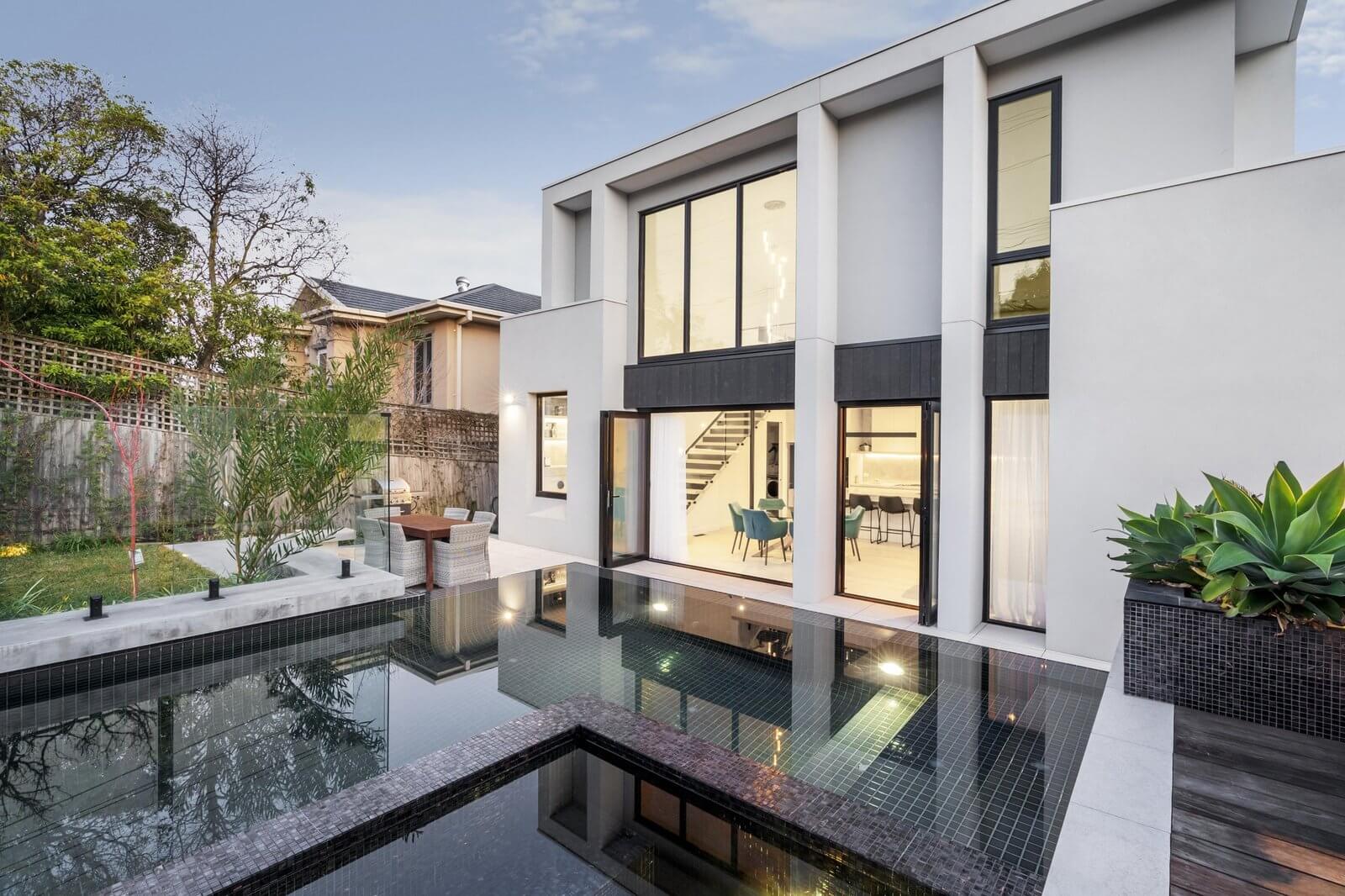
Yes. Our portfolio shows completed projects in Mount Waverley, Oakleigh, Burwood and Murrumbeena, and our testimonials come from owners of townhouses and side-by-side homes, including repeat client George Hatges, who has trusted Arch10 on more than one project.
And yes, you can get input by:
- Asking referees: How the program, variations and defects were handled.
- Visiting a finished home: Check the joinery, tiling, and waterproofing in wet areas.
We can arrange a visit to a completed project or current build site, subject to client privacy and site safety.
9. How do you design for rental market appeal? Do you understand what Melbourne tenants want?
We design for rental appeal by making both homes comfortable and cheap to run, without compromising space, aesthetics or layout.
And yes, we understand what tenants want: we build dual occupancies for investors and owner-occupiers, and energy efficiency ranks high for renters.
- What tenants say?
In the PropTrack Origin Renter Reality Report, 35% of surveyed renters said they would pay more rent for a home with energy-efficient features.
- Is energy efficiency becoming a baseline?
Yes. According to Consumer Affairs Victoria, Victorian rentals must meet minimum standards for heating, cooling, hot water, and ceiling insulation from 1 March 2027, so energy efficiency is shifting from a preference to a requirement.
- How does Arch10 design for this?
Arch10 offers energy-smart features and focuses on sustainable building options in all its projects, because solar panels, insulation and double glazing add value and cut power bills.
10. What council compliance costs or variations should I expect specific to dual occupancy?
Budget for a compulsory planning permit plus engineering, drainage, utility connections and council asset protection. Arch10 has hands-on experience with council restrictions, helps with permit applications and works with councils to resolve issues before building begins.
- Local knowledge: We work across Bayside, Stonnington, Boroondara, Whitehorse, Manningham, Glen Eira, Kingston and Monash.
- Watch for overlays: Heritage and similar overlays can add requirements and reopen appeal rights.
- Price protection: Ask what happens to your price if permit conditions change.
Ready to ask us these questions?
Call 03 9569 4305 or Book an obligation-free consultation with Arch10’s Melbourne team, and get answers to all ten questions.
FAQs
I’m a first-time dual occupancy investor with a $600k budget. Which of these questions is most important?
The most important one is whether the contract is fixed-price or cost-plus. On a $600k budget, Arch10’s fixed lump-sum contract locks the price, so overruns can’t erode your returns.
What should I do if a builder can’t answer one of these questions?
Ask for the answer in writing. If it stays vague, move on, because unclear answers now mean surprise costs later. Arch10 offers an obligation-free consultation.
Can I use these questions with my current builder if they’ve already started?
Yes. Ask for written answers on variations, remaining payment stages and defect handling. Warranty, insurance and contract questions still matter mid-build, so raise any gaps.
Do these questions apply to project home builders and custom builders?
Yes. Project builders fix inclusions, so ask what is standard; custom builders like Arch10 price changes with you. Warranty, payment and council questions apply equally.
What’s a red flag that I should stop talking to a builder?
Walk away if builders demand deposits above legal limits, cannot show registration or a Home Warranty certificate, or pressure you to sign without written specifications.