
Dual Occupancy in Melbourne: Your Complete 2026 Investment Guide
Melbourne’s dual-occupancy market has hit its stride, and there’s never been a better time to get involved. With the new VC267 planning rules making approvals faster and rental yields staying strong across key suburbs, dual occupancy is quickly becoming the go-to strategy for savvy property investors.
If you’re thinking about maximising your land’s potential or looking for your next investment move, dual occupancy might just be the answer. Let’s break down everything you need to know about building dual occupancy homes in Melbourne – from costs and regulations to the suburbs delivering the best returns.
What Exactly Are Dual-Occupancy Homes?
Simply put, “dual occupancy” means building two separate homes on one block of land. Think of it as getting double the rental income while still owning premium Melbourne real estate. Instead of having one house sitting on a block, you’ve got two properties working for you.
The beauty of dual occupancy is the flexibility. You can live in one and rent out the other, rent both for maximum income, or even sell them separately down the track (depending on council rules). It’s particularly attractive in Melbourne, where land is getting pricier by the year.
Are Dual Occupancy Homes a Good Investment in 2026?
Thinking about dual occupancy but not sure if it’s the right move for you in 2026? Dual occupancy homes let you get more out of your land by building two quality homes instead of one, without having to buy a second block.
That means two potential rental incomes, two sets of capital growth, or the flexibility to sell one and keep the other – all from a single investment.
What About the Returns?
In dual occupancy homes, you are sharing costs like site works, utilities and sometimes even design fees across two dwellings. This way, your build cost per home often works out to be more efficient than building a standalone house.
- Investors going for long-term wealth building
- Homeowners wanting to keep family close while generating rental income
- A large family needing separate individual space
The Main Types You’ll See Around Melbourne
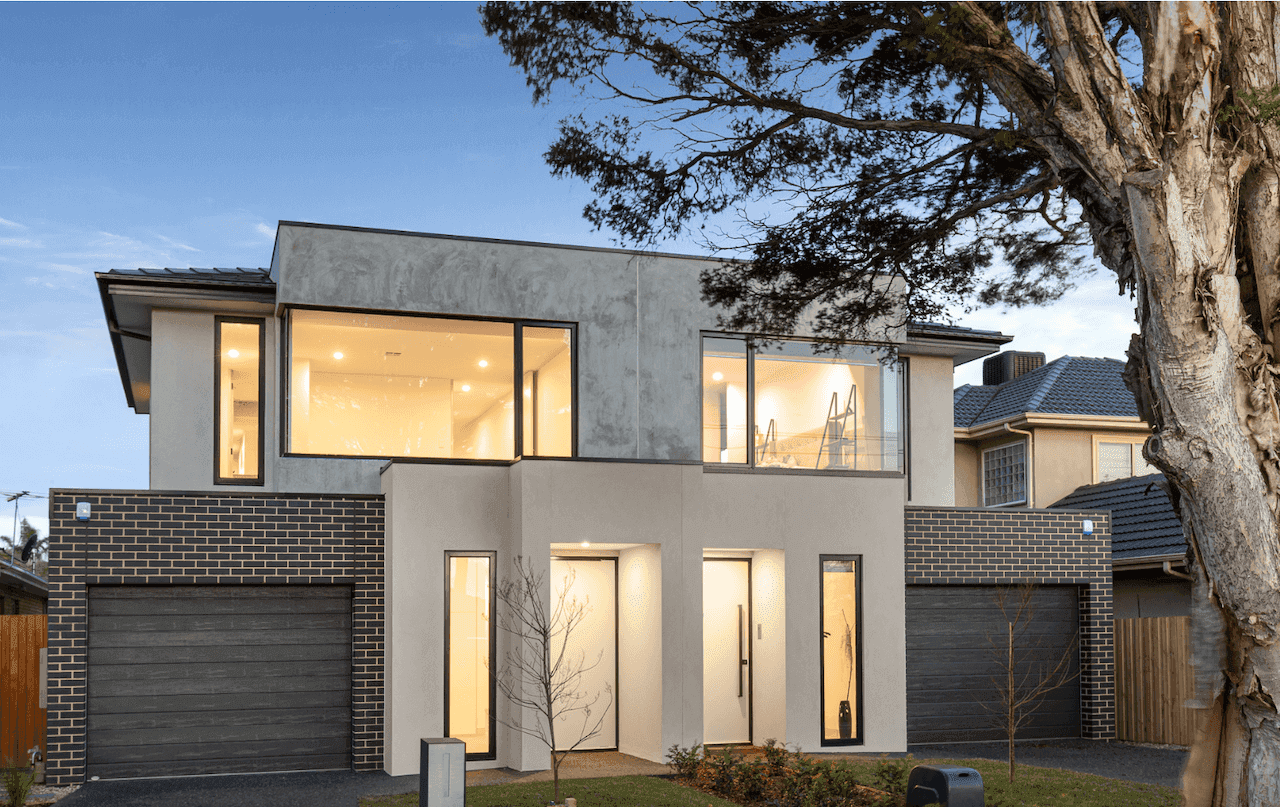
Side-by-Side Builds: These are probably what most people picture when they think dual occupancy. Two townhouses sharing a wall but with completely separate entrances and driveways. Works best on wider blocks (around 15 metres or more) and gives you that street appeal that tenants and buyers love.
Back-to-Back Setup: One property sits behind the other with a shared driveway. This setup works well on deeper blocks and tends to be more cost-effective than side-by-side. The front property usually gets better rental returns, but both can perform well with the right design.
Corner Block Developments: These are the premium option. Each property gets its own street frontage, which means better privacy, higher rents, and stronger resale values. If you’ve got a corner block, you’re sitting on gold for dual occupancy.
Duplex Style: Essentially mirror-image homes that share a central wall. They’re cost-effective to build and can look really sharp when done right. Great option if you’re after proven returns without breaking the bank.
The 2025 Game Changer: VC267 Planning Changes
Here’s something that’s flying under the radar but shouldn’t be – the Victorian government introduced amendment VC267 in March 2025, and it’s completely changed the dual-occupancy landscape.
What VC267 Actually Means for You
The new rules have streamlined the planning process big time. We’re talking approval times that are 30–40% faster than before. The government introduced something called the Townhouse and Low-Rise Code, which basically cuts through a lot of the red tape that used to slow things down.
- Before VC267: Planning approvals took anywhere from 28–35 weeks
- After VC267: Most approvals are happening in 20–24 weeks
For investors, this means you can get your projects up and running quicker, which translates to rental income starting sooner and less holding costs eating into your profits.
How the New System Works
The planning process is now more predictable. Councils have clearer guidelines to work with, which means fewer surprise rejections and less back-and-forth. If your project meets the new code requirements, you’re pretty much guaranteed approval.
The catch is that you need builders who understand the new system inside out. The rules might be clearer, but they’re also more specific. Get it wrong, and you’re back to the old slow approval process.
The Real Numbers: What Dual Occupancy Actually Costs in Melbourne

Let’s talk dollars and cents, because that’s what really matters when you’re making investment decisions.
Current Build Costs Across Melbourne
Based on recent projects, here’s what you’re looking at for construction costs:
Side-by-Side Dual Occupancy
- Cost per dwelling: $580,000 to $680,000
- Total build cost: $1.16 million to $1.36 million
- Best for: Maximum rental yields and street appeal
Back-to-Back Configuration
- Cost per dwelling: $520,000 to $620,000
- Total build cost: $1.04 million to $1.24 million
- Best for: Value-conscious investors wanting good returns
Corner Block Premium
- Cost per dwelling: $650,000 to $750,000
- Premium over standard: About 10–15%
- Best for: Long-term capital growth focus
These figures include quality finishes, energy-efficient features, and everything you need for premium rentals. They don’t include your land costs, which obviously vary hugely depending on where you’re building.
The Hidden Costs You Need to Factor In
- Planning permits and council fees: $15,000 to $25,000
- Professional services (architects, surveyors): $35,000 to $50,000
- Site works and preparation: $20,000 to $40,000
- Landscaping and driveways: $25,000 to $45,000
Total project timeline: Usually 12–18 months from start to finish, including approvals.
Where the Money’s Being Made: Melbourne’s Best Dual Occupancy Suburbs
Location drives everything in property, and dual occupancy is no different. Here’s where the smart money is going in 2026.
Eastern Suburbs: Established and Growing
Glen Waverley
Current rental yields are sitting around 4.2% for quality dual occupancy. You’re looking at $650–$750 per week per dwelling, and the area’s been delivering solid 8.5% annual capital growth. Great for professional couples and families who want good schools and transport.
Yields are a bit lower at 3.8%, but you’re playing in the premium market here. Rents of $700–$850 per week per dwelling aren’t uncommon, and the capital growth has been steady at around 7.2% annually. Perfect if you’re targeting the luxury rental market.
This is where transport infrastructure really pays off. Yields of 4.5% with rents around $600–$700 per week, plus you’ve got that train line bringing consistent tenant demand. Capital growth has been impressive at 9.1% annually.
Growth Areas: Where the Action Is
Reservoir
This is one to watch. Yields are hitting 5.1% as the area gentrifies, with rents around $500–$600 per week. The three-year capital growth trend is sitting at 12.3%, which is pretty spectacular. Today, young professionals have begun to find out about the place.
Coburg
Inner-north area with 4.8% returns and weekly rents of $550–$650. 10.7% capital growth per annum makes it appealing for investors seeking both growth and income. The community of creative professional finds this locality particularly attractive.
Footscray
Infrastructure development is driving this market hard. Yields of 4.6% with rents $525–$625 per week, plus 11.2% annual capital growth. The city workers are moving in as transport connections improve.
All these numbers are based on actual dual occupancy performance, not just general market data. Individual results will vary depending on your specific property and how well it’s designed and finished.
Money Matters: Financing and Tax Benefits
Getting the funding right can make or break your dual occupancy project. Here’s what you need to know about financing and the tax side of things.
Financing Options That Actually Work
Construction Loans
Most investors go this route. You pay interest only during construction, with funds released as building milestones are hit. Once construction’s complete, you can convert to a standard investment loan. Current rates are sitting around 5.8-6.4% for investment properties.
The Owner-Occupier Advantage
If you’re planning to live in one property and rent the other, you can often get owner-occupier rates on the portion you’ll be living in. This can save you a fair bit on interest costs.
SMSF Investment
Self-managed super funds can invest in dual occupancy, which opens up some interesting tax planning opportunities. The rules are bit more complex, but the long-term benefits can be substantial.
Tax Benefits That Boost Your Returns
Depreciation Claims
New builds are gold for depreciation. You’re typically looking at $15,000–$25,000 in annual deductions per property. The building itself depreciates at 2.5% per year, while fixtures and fittings can depreciate much faster.
Negative Gearing
All your interest payments, council rates, insurance, and maintenance costs are deductible. For dual occupancy, you’re essentially getting double the deductions compared to a single property.
Capital Gains Planning
Hold the properties for more than 12 months and you get the 50% capital gains discount. Many dual occupancy projects can also be subdivided later, giving you options to sell one and keep one, or sell both separately for potentially better prices.
The key is getting professional tax advice before you start building, not after. The structure you choose upfront can make a huge difference to your long-term returns.
Navigating Council Approvals: The Planning Permit Process
Melbourne’s planning system can seem daunting, but it’s actually quite manageable if you know what you’re doing and work with people who understand the new VC267 rules.
How the Process Actually Works
Stage 1: Site Analysis
Everything starts with understanding what your block can handle. Soil tests, council overlays, zoning rules – all the technical stuff that determines what you can actually build.
Stage 2: Design and Documentation
This is where architectural plans get developed specifically for council approval. Under VC267, there are clearer guidelines about what councils want to see, which makes this stage more predictable.
Stage 3: Submission and Approval
With VC267, the actual submission process is more streamlined. Councils have better guidelines to work with, which means faster decisions and fewer rejections.
What Happens If Things Go Wrong
Even with the new rules, sometimes councils say no. If that happens, you’ve got options:
VCAT Appeals: The Victorian Civil and Administrative Tribunal can override council decisions. It’s an extra step, but many projects that get rejected by councils get approved at VCAT.
Design Modifications: Sometimes it’s just a matter of tweaking the design to meet specific council concerns.
Alternative Approaches: Experienced builders know multiple ways to achieve the same outcome while meeting different council requirements.
The key is working with builders who’ve been through this process many times and know how to navigate potential problems before they become expensive delays.
Making Smart Decisions: Investment Strategy Considerations
Dual occupancy isn’t just about building two houses – it’s about building the right two houses in the right location with the right financing structure.
Subdivision Potential: Your Future Options
Many dual occupancy developments can be subdivided later, creating two separate titles. This is huge for long-term planning because it gives you options:
- Sell one property to reduce debt, keep the other for ongoing income
- Leave one to each of your kids in your will
- Use different investment strategies for each property
- Take advantage of different market conditions for each sale
Not every dual occupancy can be subdivided – it depends on minimum lot sizes and council rules. But when it’s possible, it adds significant flexibility to your investment.
Rental Management Strategy
Getting good tenants and keeping them is crucial for dual occupancy success. Quality properties attract quality tenants, which means less vacancy, fewer problems, and better rental growth over time.
The key factors that drive rental performance:
- Location near transport and amenities
- Modern, energy-efficient design that keeps utility bills reasonable
- Quality finishes that photograph well and create good first impressions
- Practical layouts that work for different types of tenants
Long-Term Market Trends
Melbourne’s population is growing by over 100,000 people each year, but housing supply isn’t keeping up. This fundamental imbalance drives both rental demand and capital growth.
Medium-density housing like dual occupancy is increasingly seen as the solution to Melbourne’s housing affordability challenges. Government policy is moving to support this type of development, which is part of why we got the VC267 changes.
From an investment perspective, dual occupancy sits in the sweet spot – higher yields than single houses, but more accessible than large-scale development projects.
Why Dual Occupancy Makes Sense Right Now
Several factors are coming together to make 2026 a particularly good time for dual occupancy investment in Melbourne.
Planning Reform: VC267 has made approvals faster and more predictable. This reduces holding costs and gets rental income flowing sooner.
Market Conditions: Interest rates have stabilised, and rental demand remains strong across Melbourne. Construction costs have also levelled out after the volatility of recent years.
Government Support: There’s clear policy support for medium-density housing, which means dual occupancy developments align with where government planning is heading.
Affordability Pressures: Both buyers and renters are looking for alternatives to traditional houses. Dual occupancy provides options for both markets.
Investment Performance: The numbers speak for themselves – dual occupancy consistently outperforms single dwelling investments in both rental yield and capital growth.
Getting Started: What You Need to Know
If you’re thinking about dual occupancy, the most important thing is to work with people who specialise in this type of development. It’s not just about building – it’s about understanding planning rules, maximising rental returns, and positioning your investment for long-term growth.
Key Questions to Ask Any Builder
- How many dual occupancy projects have you completed in the last two years?
- Are you fully up to speed with VC267 requirements?
- Can you provide references from recent dual occupancy clients?
- What’s your average planning approval time?
- Do you offer fixed-price contracts with no variations?
The Financial Reality Check
Make sure you’re realistic about costs and returns. Good quality dual occupancy isn’t cheap, but it’s an investment that can deliver strong returns if done right. Factor in:
- Total project costs, including all professional fees
- Holding costs during construction (around 12–18 months)
- Ongoing property management and maintenance
- Your financing costs and tax position
Location, Location, Location
The suburb you choose will have more impact on your returns than almost any other factor. Look for areas with:
- Strong rental demand from multiple tenant types
- Good transport connections to employment centres
- Established amenities (shops, schools, parks)
- Evidence of ongoing investment and development
Dual occupancy represents one of the best opportunities in Melbourne’s current property market. With the right approach, the right location, and the right builder, it can deliver both strong rental yields and solid capital growth.
The key is doing your homework upfront and working with specialists who understand both the construction and investment sides of the equation. Get that right, custom home builder and dual occupancy can be a genuine wealth-building strategy that works in Melbourne’s challenging property market.
FAQs
What’s the difference between dual occupancy homes and a duplex?
A duplex home can be described as a specific type of dual occupancy where two homes share a common wall. Dual occupancy is a broader term. It does include duplexes, side-by-side houses and a home plus a separate dwelling in its purview.
Can I get a home loan for dual occupancy homes?
Yes, it is not that difficult to get a home loan for dual occupancy projects, though loan options depend on whether it is owner-occupied or investment-focused.
Do dual occupancy homes need council approval in Melbourne?
If you are intending to build a dual occupancy home in Melbourne, it would do you good to know that you need council approvals, which include the acquisition of planning permits and adherence to local zoning rules.